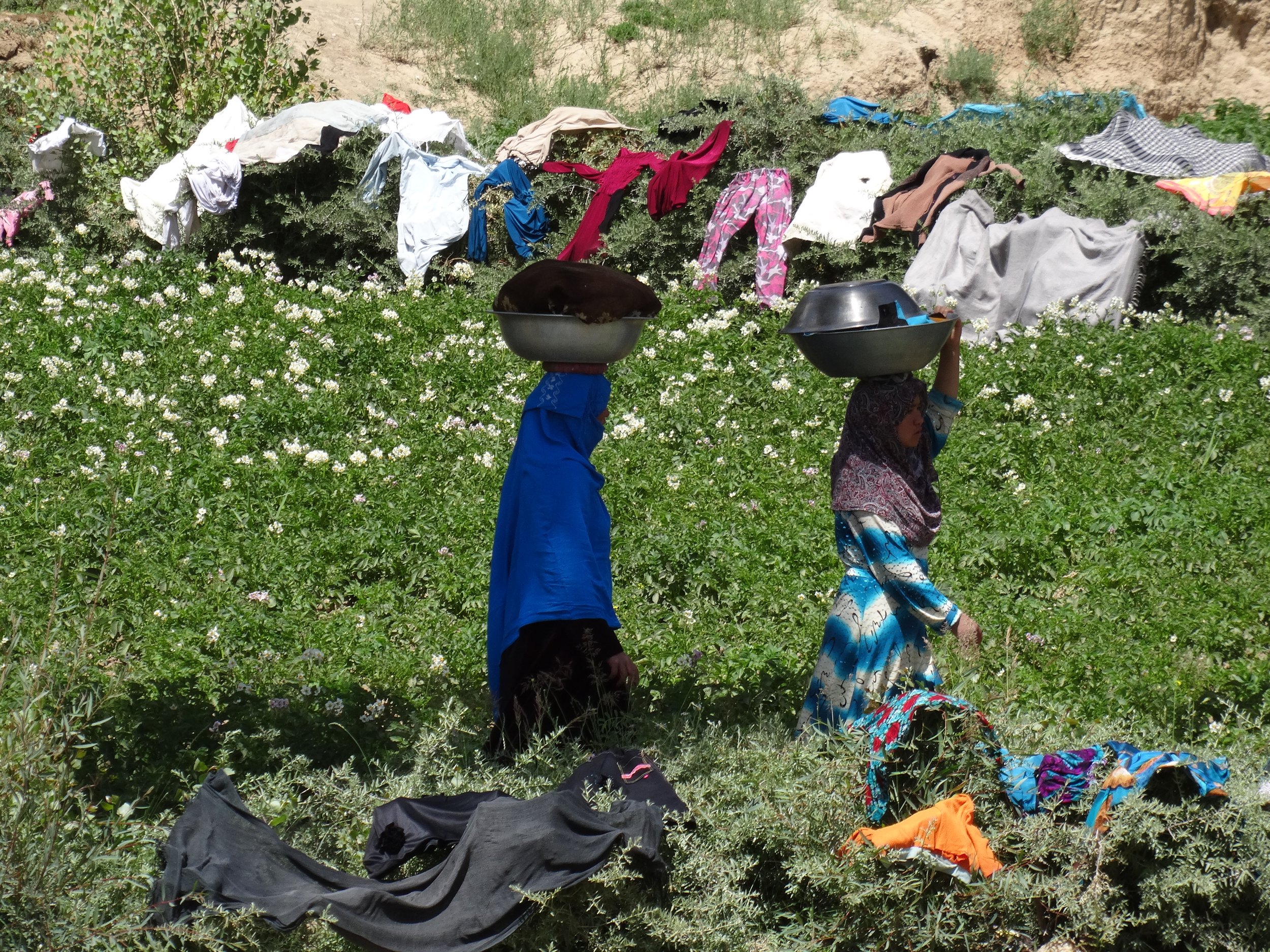
Water as Women’s Commons
Bamyan, Afghanistan
Where water flows, women gather; where women gather, community forms.
This project studies how spaces for water and spaces for women are inextricably linked in Bamyan, Afghanistan. Through spatial analysis, on-site engagement, and a photographic study, we traced how everyday water infrastructures quietly organize social life. Our research shows that when access to water becomes safe, proximate, and dignified, it legitimizes women’s presence in public, fostering connection, care networks, and the collective rhythms that seed belonging. This directly extends our Family Space in Bamyan case study: water inherently brings women together; the gathering of women in turn brings families and communities together; when communities can find common ground, there is space for peace.
Method
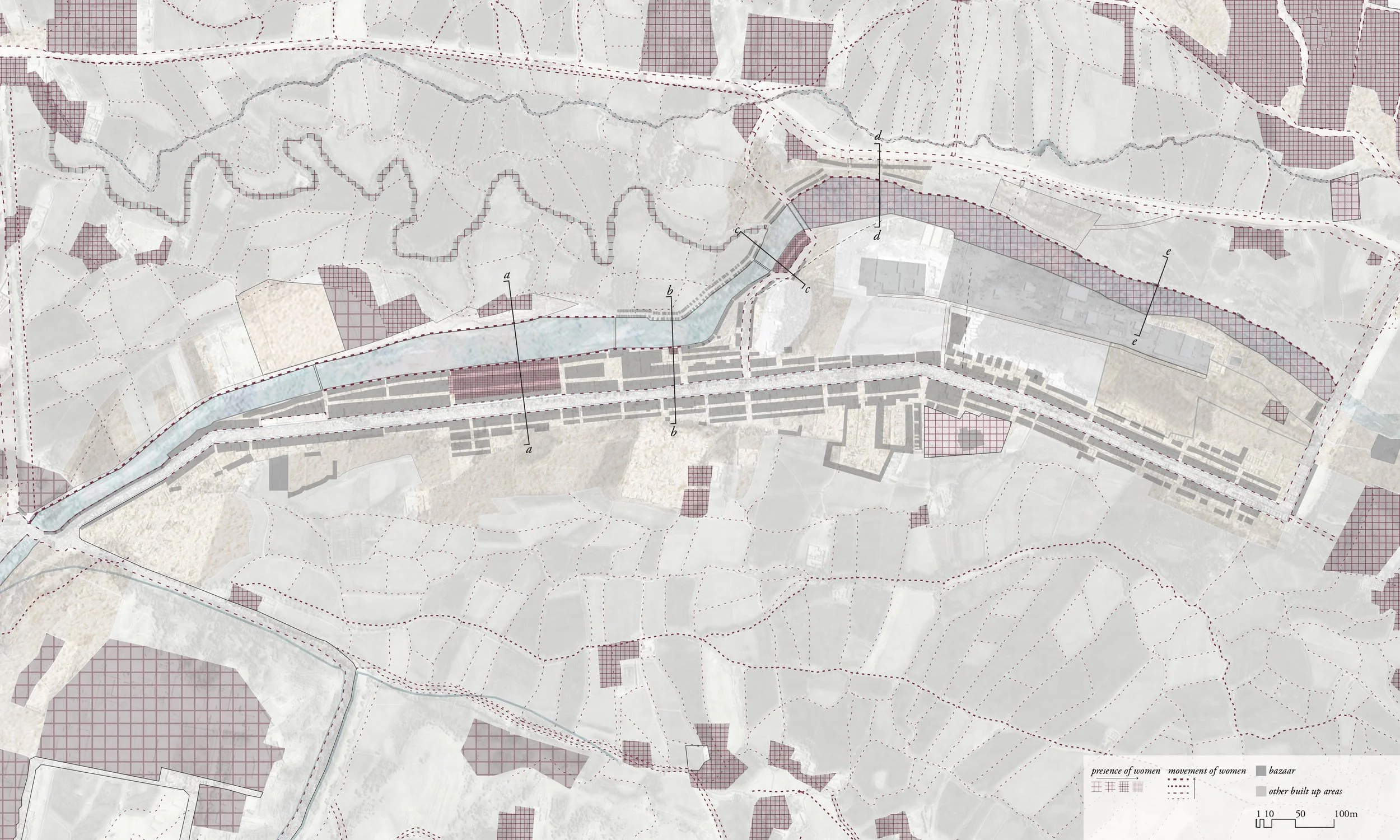
Spatial Analysis: mapping water nodes, paths, edges, and sight lines; observing temporal patterns of use.
On-site Engagement: walking interviews, sketch mapping, and small group conversations.
Photographic Study: documenting micro-geographies of care (containers, bowls, thresholds), and the body-scale ergonomics of washing and waiting.
Findings
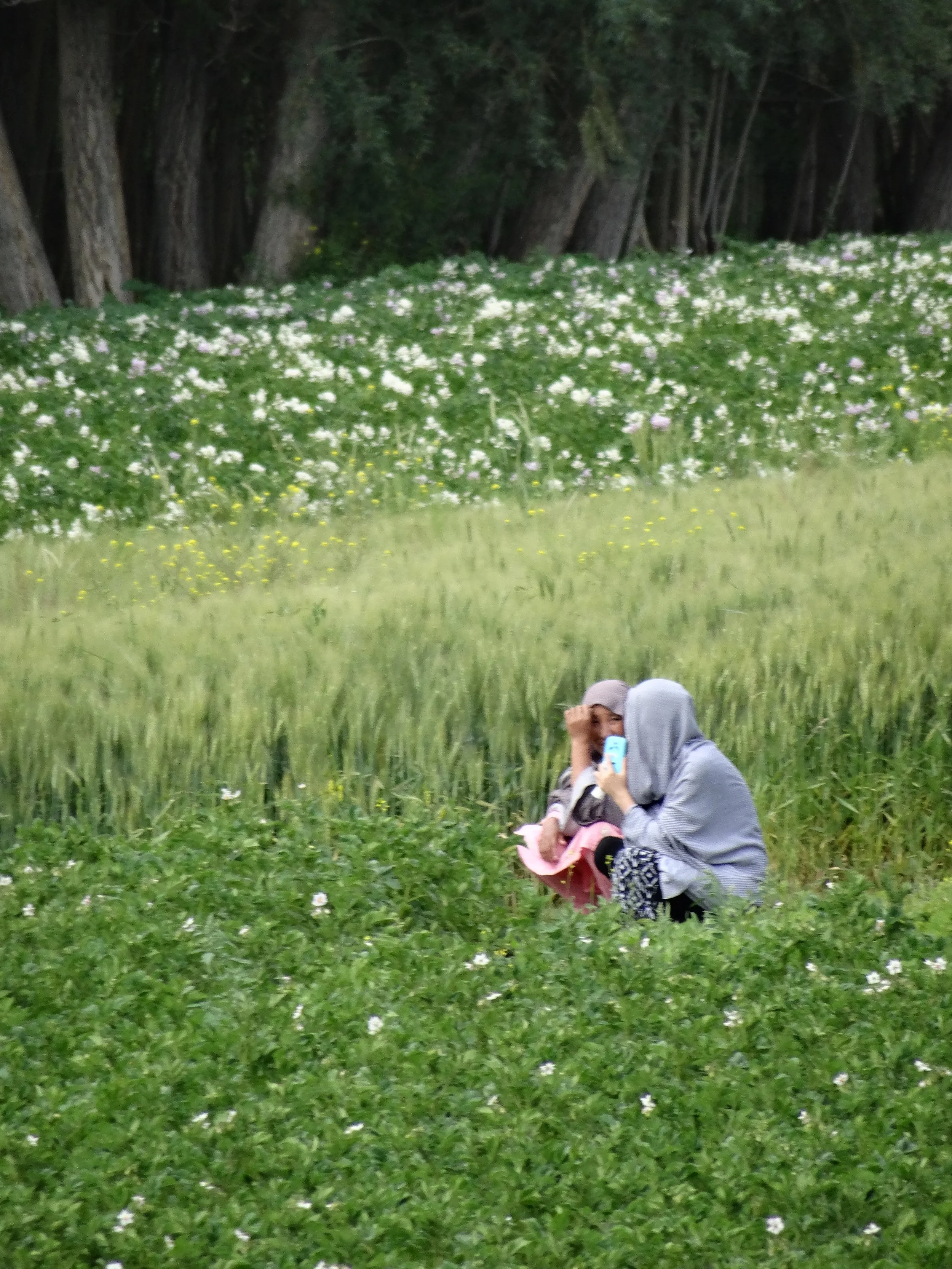
Water vindicates public presence. Because water is tied to cooking, washing, and household survival, it legitimizes women’s movement beyond the home and anchors their right to occupy public space.
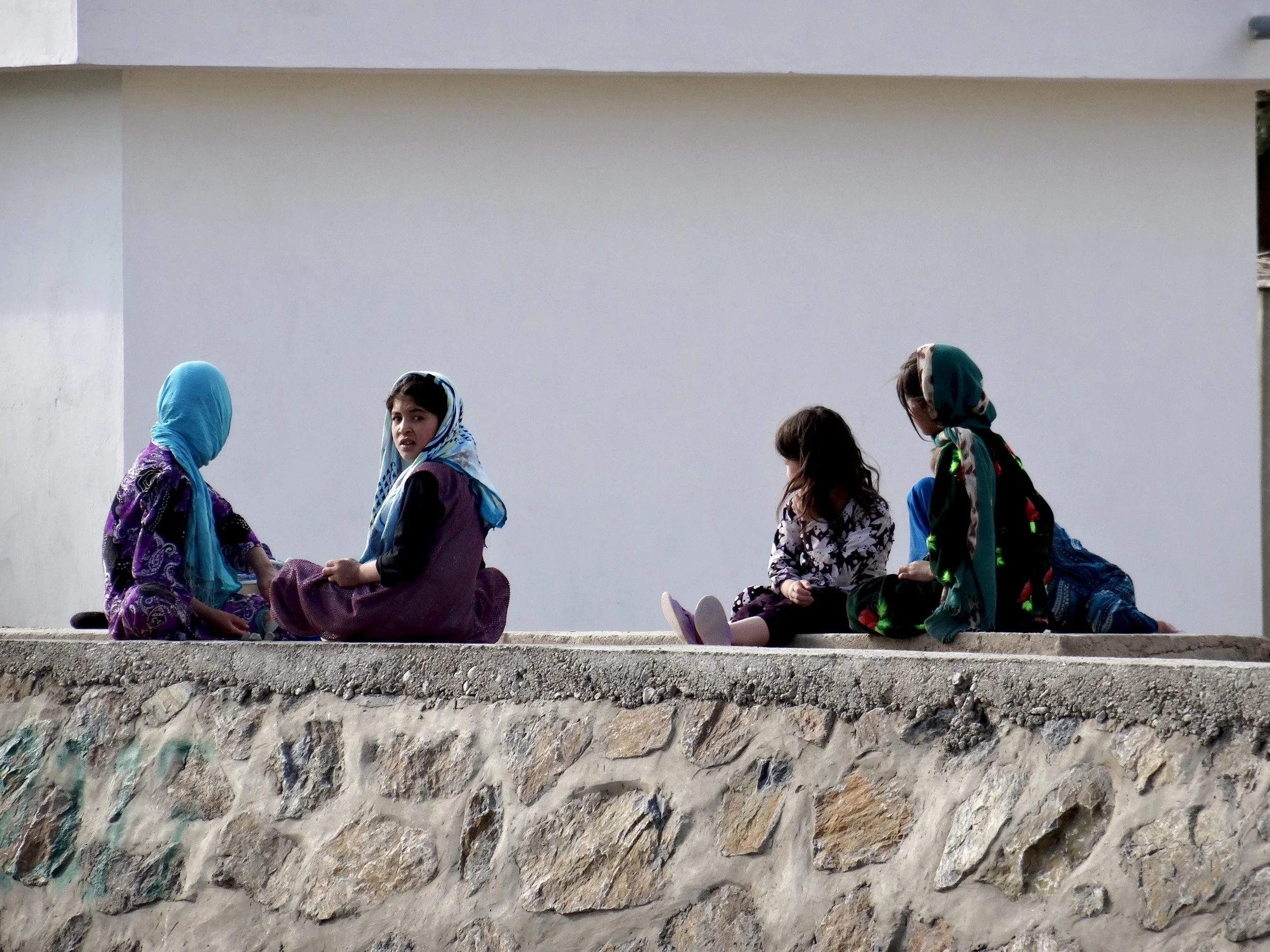
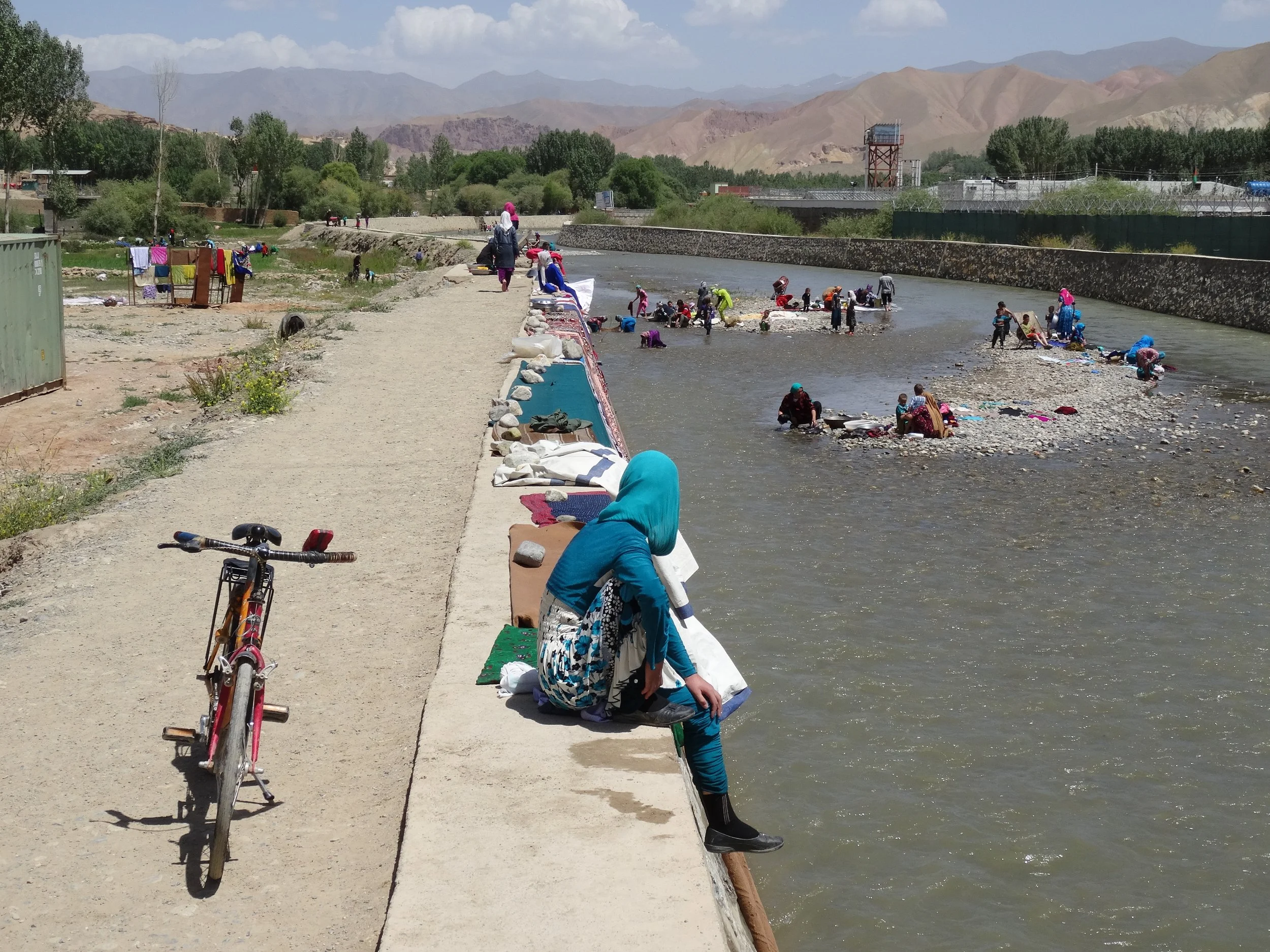
Micro-commons emerge at access points. Queues, waiting zones, shade lines, and ledges become stages for news, advice, and mutual aid; infrastructure as social fabric.
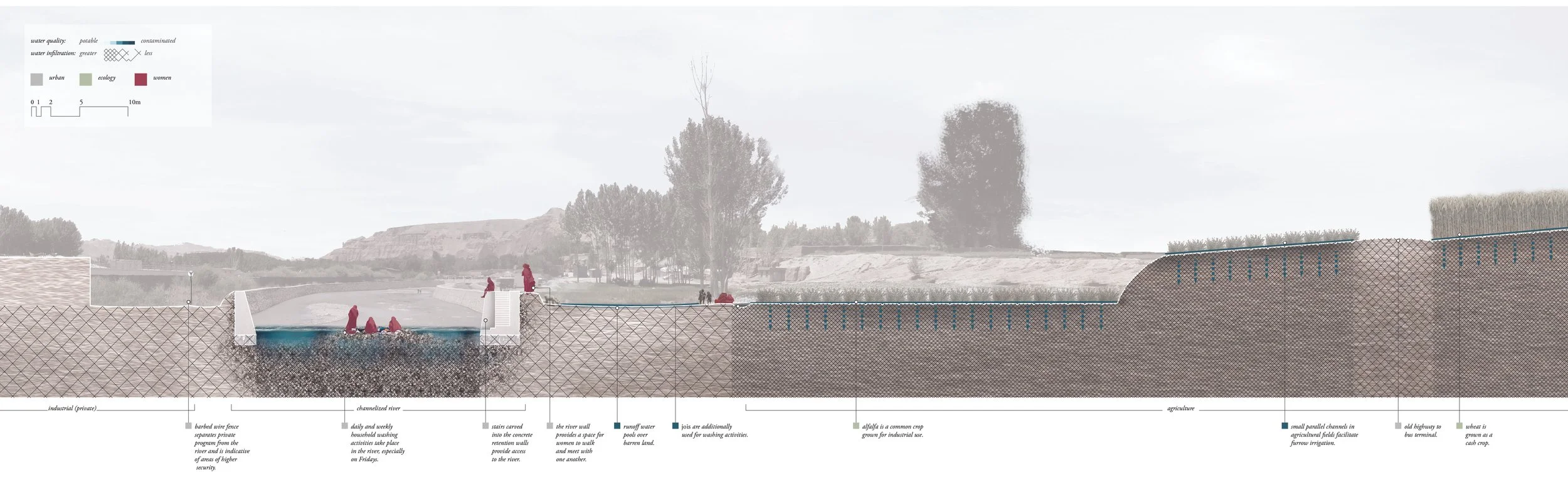
Edges matter. Gentle slopes, low walls, and staggered stairs create privacy gradients that are necessary for safety, especially for women.
Routine builds resilience. Repeated rhythmic trips to water points produce predictable encounters; an economy of trust that families rely on in times of stress.
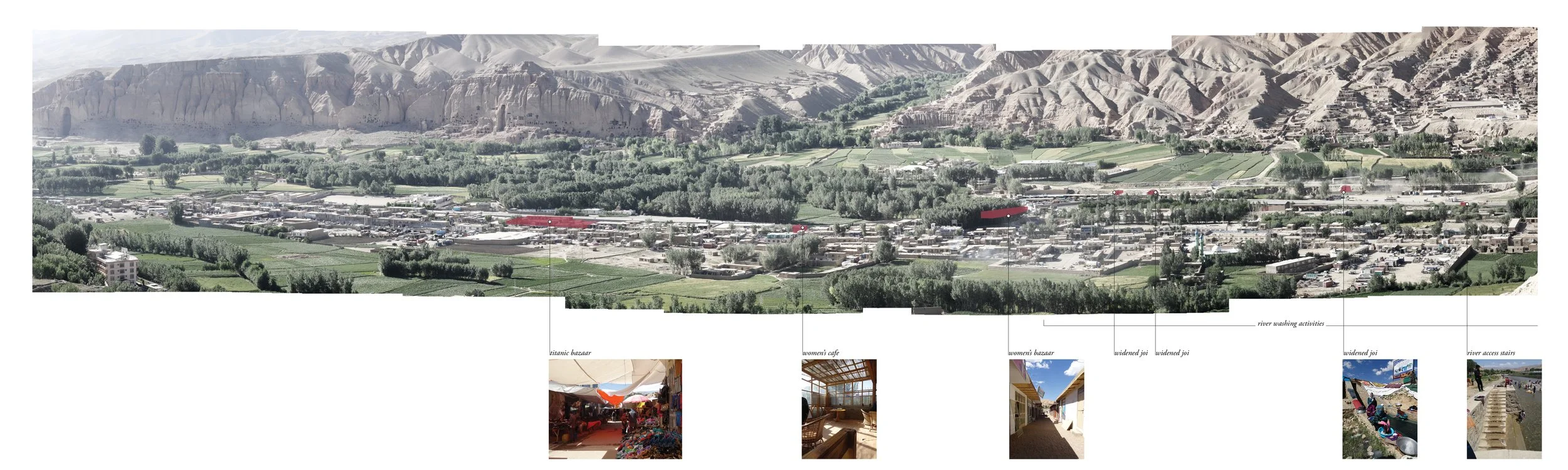
Channelization reconfigured movement. The river’s northern edge now acts as a women-preferred promenade, while widened jois support weekly washing as a communal ritual.

Why It Matters
If water is designed only as a pipe and spigot, we miss its civic power. In Bamyan, water is a social right and a spatial right: it is how women enter public life, how families exchange care, and how communities come together in solidarity to practice grass-roots peace. Treating water infrastructure as women’s commons reframes investment in utilities as investment in belonging, safety, and social cohesion: the very conditions our Family Space in Bamyan work names as prerequisites for liberation.
Impact
This research offers a design brief for spatial justice: locate and upgrade water nodes as micro-civic rooms; formalize the informal without erasing it; and resource women’s everyday routes as legitimate public space. The result is resilient, low-cost infrastructure that multiplies social value.
Project Type: Research and Spatial Justice Inquiry
Year: 2017
Location: Bamyan, Afghanistan
Services: Site Analysis; Community Engagement; Spatial Analysis; Field Photography; Mapping; Opportunity Framing.